A Hospital in Her Name
Shaukat Khanum was diagnosed with cancer in 1985. She was treated at a government hospital in Lahore, the best that was available, and still so inadequate that her son watched, night after night, as patients from poorer families sat on corridor floors, unable to afford the medicines that were keeping others alive. She died shortly after.
In the weeks that followed, Imran Khan made a decision he never formally announced. Pakistan would have a cancer hospital that treated every patient, whether or not they could pay. He would build it himself.
He was thirty-two, captaining the national cricket team, and had never built anything more than a dressing-room atmosphere. It would take him nine years.
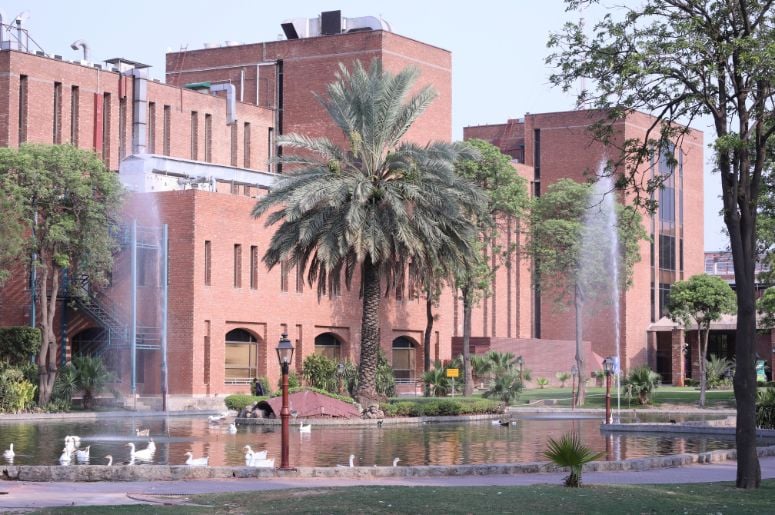
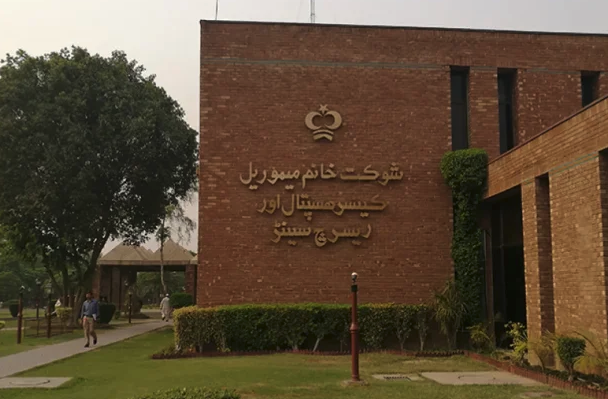
Shaukat Khanum Memorial Cancer Hospital & Research Centre, Lahore, the original campus.
Raising It, Rupee by Rupee
What followed was a sustained national fundraising effort. Imran travelled Pakistan village by village, city by city, standing on stages, in squares, in living rooms. Children emptied their piggy banks. Women pulled gold bangles off their wrists. Farmers gave what they could; industrialists gave what they should. The cricketer became, in those years, a familiar face for public giving, and people responded.
The first patient was admitted on 29 December 1994. The hospital opened with its founding commitment written into policy rather than into a plaque: no patient to be turned away for lack of means. Today, more than 75% of treatment at SKMCH is provided free of cost, funded by public donations.
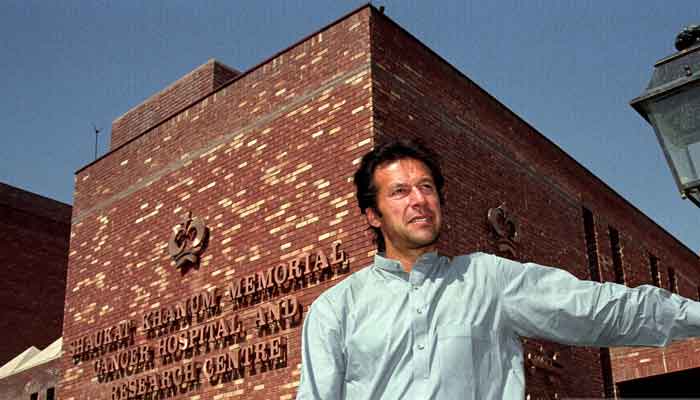
Outside the hospital he willed into existence.
A Second Hospital
For two decades after Lahore, patients travelled hundreds of kilometres from Khyber Pakhtunkhwa and tribal areas to receive treatment. In December 2015, SKMCH's second hospital opened in Peshawar, bringing cancer care and the same free-of-cost guarantee to the north of the country. A third campus is under construction in Karachi.
Together, the three hospitals form the largest charity-funded cancer care network in Pakistan, supported by an international fundraising operation that runs in the UK, the US, and Canada, and by the continued generosity of ordinary Pakistanis who have kept donating year after year.
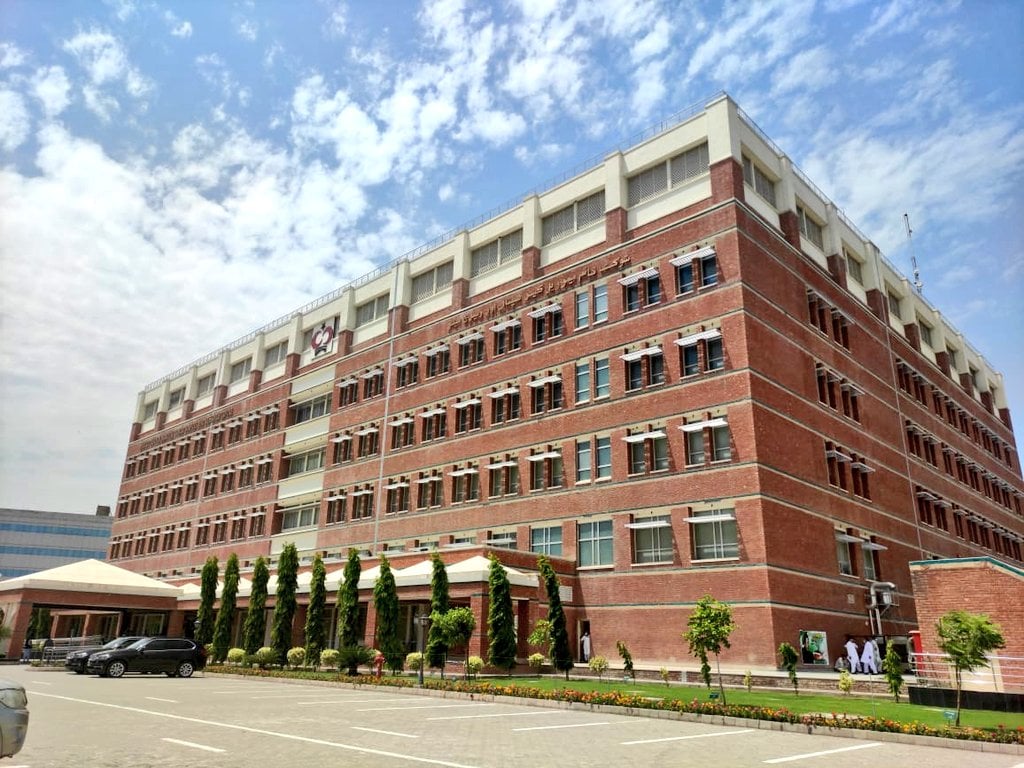
SKMCH Peshawar, opened December 2015, extending the free-of-cost model to northern Pakistan.
Namal: A University in the Hills
If Shaukat Khanum was his answer to disease, Namal University was his answer to poverty. Built in 2008 in Mianwali (the constituency he would go on to represent in the National Assembly, and one of the more economically neglected districts of Pakistan), Namal College (now Namal University) was founded on a simple premise: that a university education of real quality should reach the rural poor, not only those in Lahore and Karachi.
Namal was established as an associate college of the University of Bradford in the UK. It offers scholarships to gifted students from low-income families across Pakistan, many of them the first in their villages ever to attend university. The campus sits on the shore of Namal Lake, surrounded by the hills of the Salt Range.
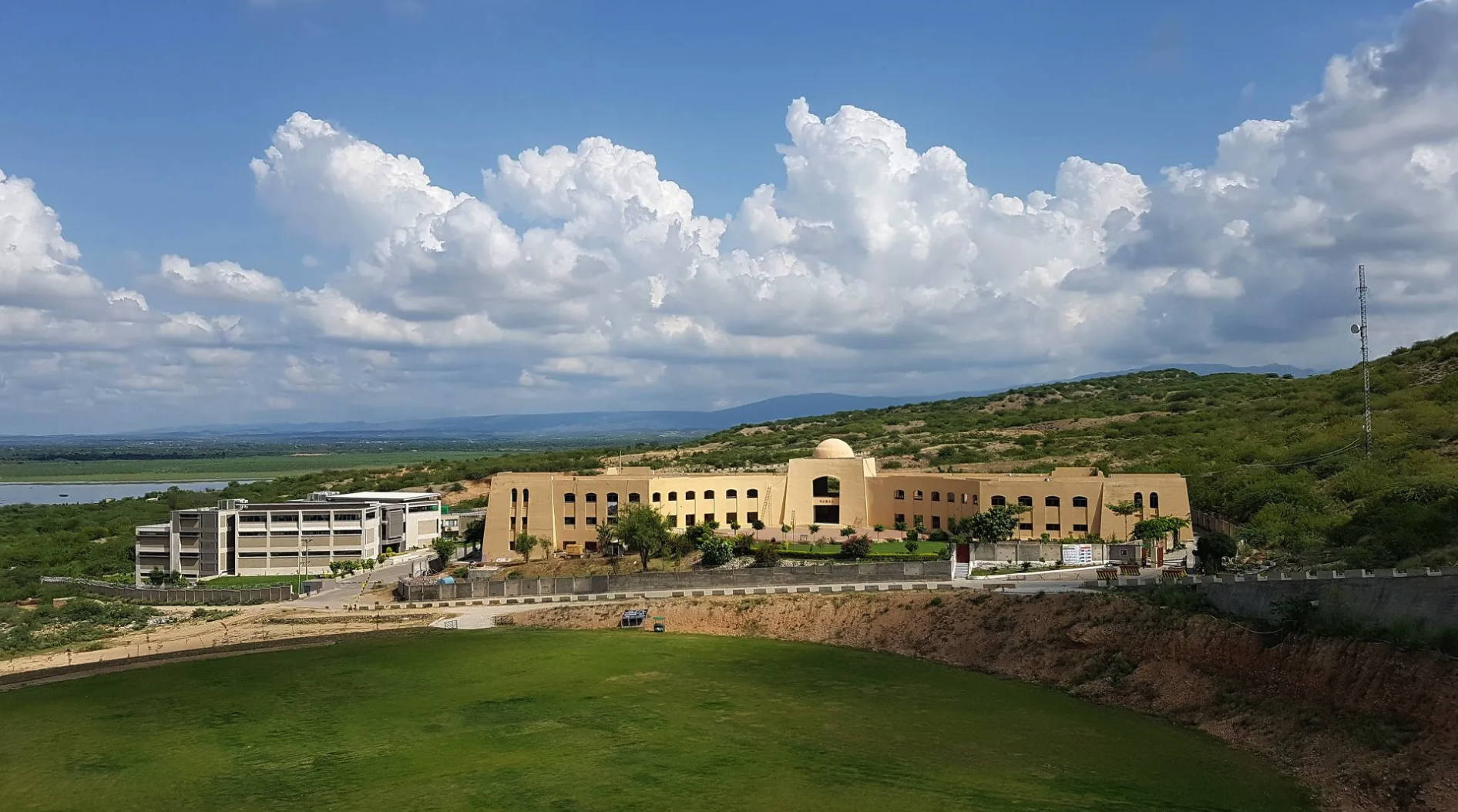
Namal University on the shore of Namal Lake, in the hills of Mianwali.
The Thread That Runs Through It All
What binds the hospital, the university, the Prime Minister's Ehsaas programme, and the smaller initiatives he has supported over four decades is a single idea he inherited from his mother and refined into a public philosophy: that the measure of a society is what it does for the people who cannot pay it back. He has said it in English, in Urdu, and in Pashto. He has said it to donors in London and to farmers in Mianwali. Across those decades, his public work has returned to the same point.
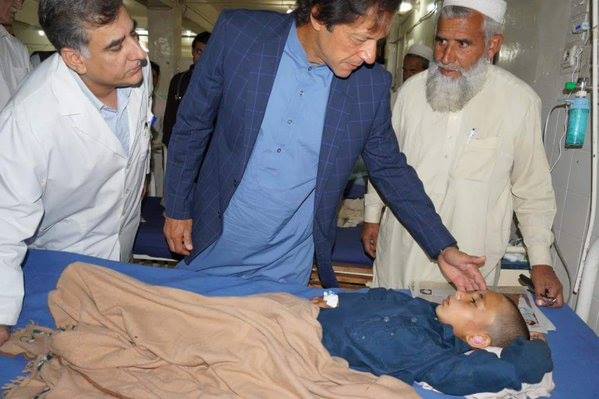
Imran Khan Visits the Peshawar Hospital
As Prime Minister, inside the hospital he helped build (Cancer Appeal).