1996 · Lahore

A New Party, One Word

On 25 April 1996, Imran Khan stood in front of a modest gathering in Lahore and announced the formation of a new political party. He called it Pakistan Tehreek-e-Insaf, the Pakistan Movement for Justice. It was built around a single idea, stated in its name: that justice in the courts, in the tax system, and in who ran the country for whom was the broken thing that had to be fixed before anything else could be.

Most political commentators gave it a year. A charismatic cricketer dabbling in politics was a familiar story, and they had watched it fail. The party contested the 1997 general elections and won no seats. It contested 2002 and won one: Imran's, in Mianwali.

He decided to stay.
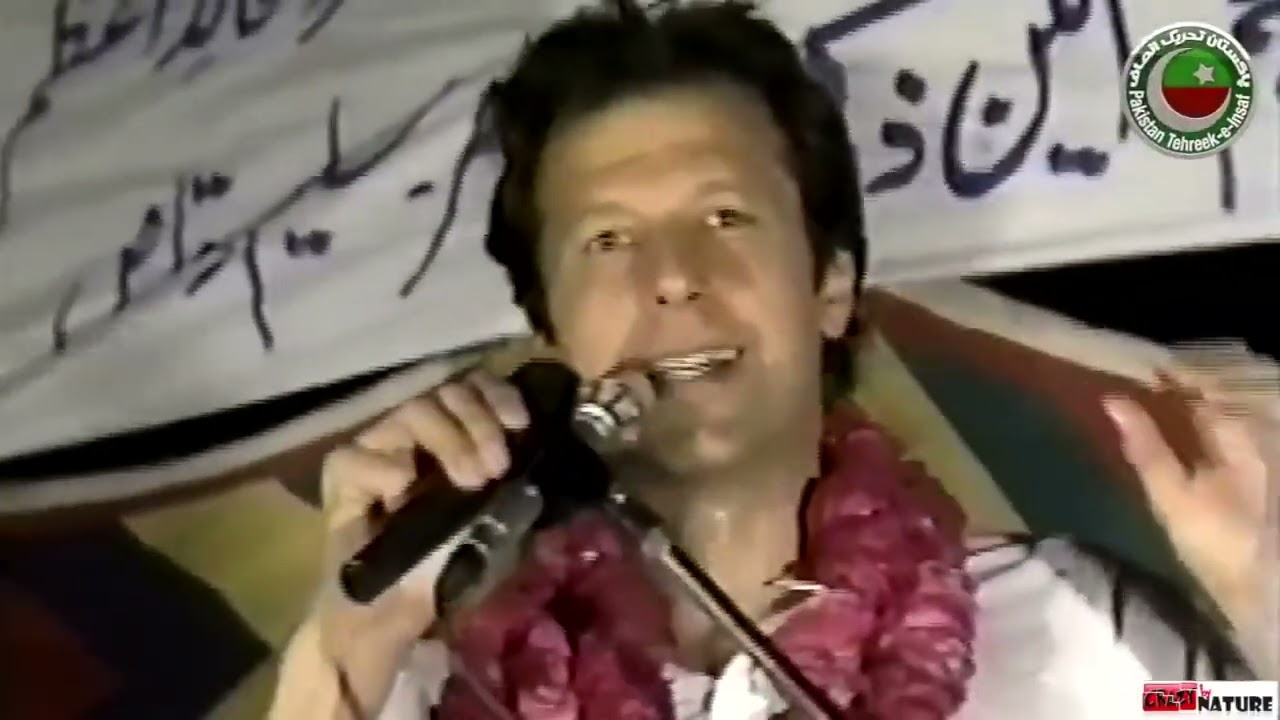
Imran Khan at an early PTI rally in 1996

The early years: an early PTI rally, with garlands and a single microphone.

1997 – 2013 · The Long Climb

Sixteen Years in the Wilderness

For sixteen years, PTI was a party of one. It boycotted the 2008 general election on principle. It suffered defections, ridicule, and the standard indignities of Pakistani opposition politics. After 2011, its support grew quickly. Young Pakistanis, overseas Pakistanis, and middle-class Pakistanis who had never voted before began to see in PTI something the two established dynastic parties could not offer them: someone who did not need the system, and therefore did not have to protect it.

On 30 October 2011, PTI held a jalsa in Lahore's Minar-e-Pakistan that drew an estimated 100,000 people. By most accounts, it was the moment the political establishment stopped laughing. In 2013, the party finished third nationally and formed the provincial government in Khyber Pakhtunkhwa, where it would govern, uninterrupted, for almost ten years.
Voices from the Jalsa

Singing at the rally

Large PTI rallies after 2011 often included stretches where Imran Khan and the crowd sang together. Two clips are below.

“Junoon Se, Ishq Se, Milti Hai Azaadi,” sung by Salman Ahmad at the jalsa.

Peshawar jalsa: a Nusrat Fateh Ali Khan ghazal, with the crowd singing along.

Timeline

From one seat to 22nd Prime Minister

1996
PTI founded in Lahore
2002
First Assembly seat, Mianwali
2011
Minar-e-Pakistan jalsa
2013
Forms govt. in KP
2018
22nd Prime Minister of Pakistan
18 August 2018 · Islamabad

Sworn In

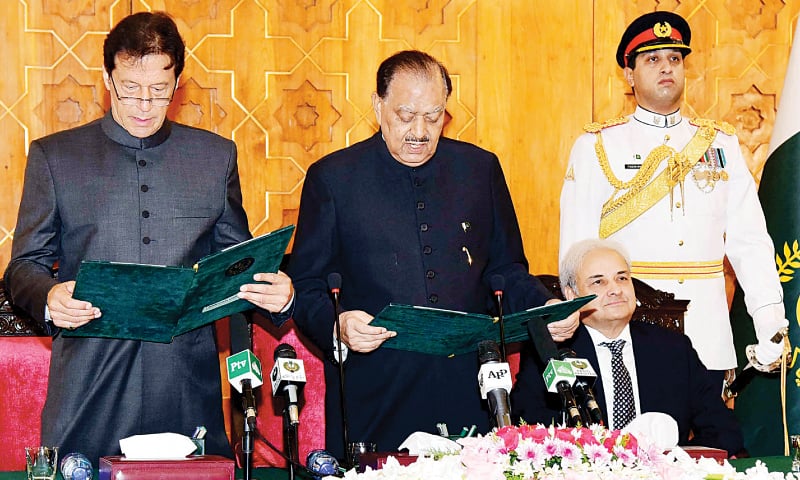
On 18 August 2018, in the Aiwan-e-Sadr in Islamabad, Imran Khan took the oath as the 22nd Prime Minister of Pakistan. The oath was administered by outgoing President Mamnoon Hussain. His mother had been dead for thirty-three years; his hospital had been treating patients for twenty-four; his party was twenty-two years old. He was sixty-five.

In his first address to the nation the following evening, he spoke at length and without notes, in a style that stood out from typical prime-time addresses. He spoke about the state of the country's finances. He spoke about the poor, and about the tax system that had for seventy years excused the rich from funding the schools and hospitals their own children did not need. He spoke about Medina, about the idea of a state that held itself responsible for every one of its people.

Imran Khan takes the oath of office as Prime Minister, 18 August 2018

Taking the oath of office, 18 August 2018.

In Government

Six Programs That Defined an Administration

The PTI government's four years in office were turbulent, marked by a pandemic, an economic crisis, and a relentless political opposition. The programs it launched still shape public debate and policy discussion.

Ehsaas Programme

The largest social protection initiative in Pakistan's history: a cash-transfer and welfare umbrella for more than 16 million of the country's poorest families, cited internationally as a reference model for developing-country safety nets.

Sehat Sahulat Card

Universal health coverage: by the end of 2022, every family in Khyber Pakhtunkhwa, Punjab, and Azad Kashmir was entitled to free inpatient treatment at private and public hospitals across Pakistan, up to Rs 1 million per year.

Ten Billion Tree Tsunami

The largest reforestation effort in the region's history, scaled up from the pilot Billion Tree Tsunami in KP. Recognised by the World Economic Forum and the United Nations as a global nature-based climate model.

Smart COVID Lockdown

Pakistan's data-driven, district-by-district pandemic response drew praise from the World Health Organization and Bill Gates for balancing public health with the needs of a fragile daily-wage economy.

Single National Curriculum

A long-promised reform to unify public, private, and madrassa curricula in Pakistan for the first time, aimed at reducing the class divide that three parallel education systems had reinforced over decades.

Langar Khanas & Panahgahs

Free meals and shelters (over 200 across the country) for the urban poor, the homeless, and daily labourers. A small programme by budget, but visible in cities across Pakistan.

Climate · 2014 – 2022

From a Billion Trees to Ten

The original Billion Tree Tsunami was launched in 2014 by the PTI government in Khyber Pakhtunkhwa. By 2017 it had surpassed its billion-tree target a year early, and became the first such project in the developing world to meet a commitment made under the Bonn Challenge for global forest restoration.

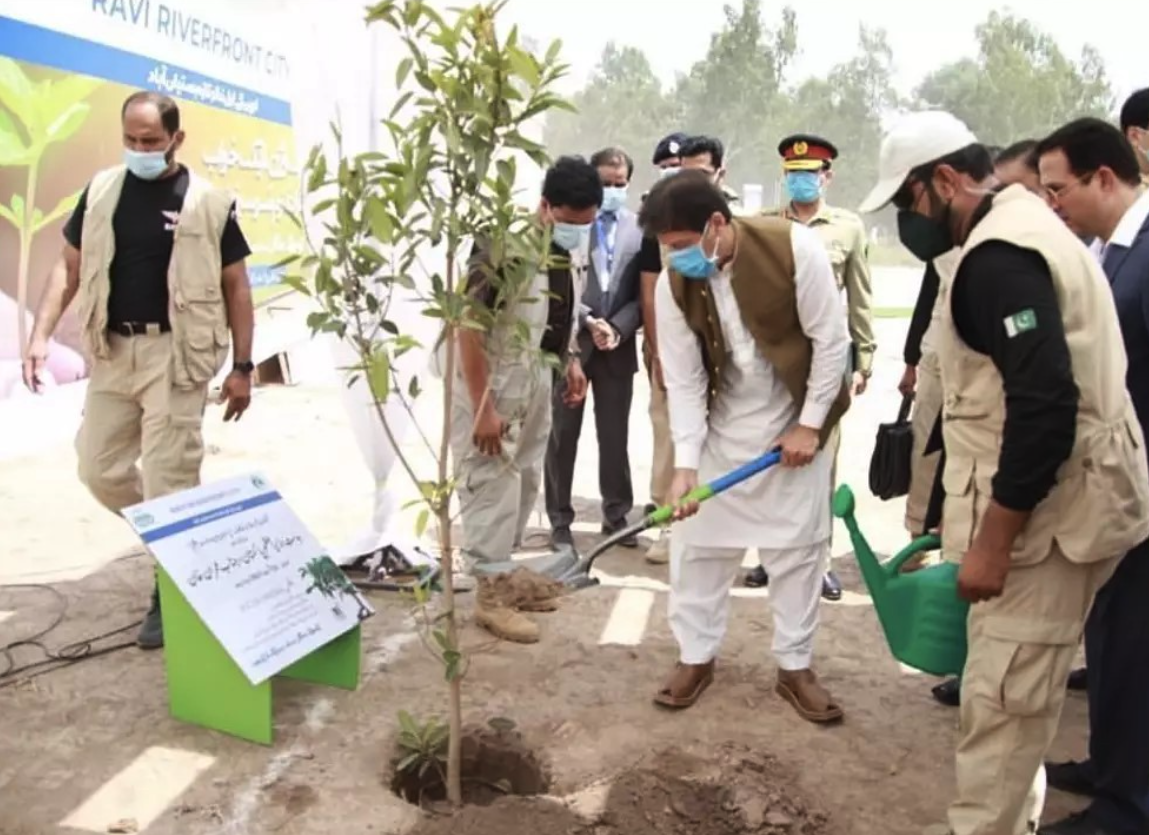
As Prime Minister, Imran scaled it to a national Ten Billion Tree Tsunami. He took the idea to the UN climate conferences; the programme was cited by the World Economic Forum as one of the leading examples of state-led reforestation anywhere in the world. For a country often listed among the most climate-vulnerable nations, it remains a major part of his environmental record.

Imran Khan plants a tree as Prime Minister

Tree-planting as Prime Minister, part of the Ten Billion Tree Tsunami programme.

Foreign Policy

On the World Stage

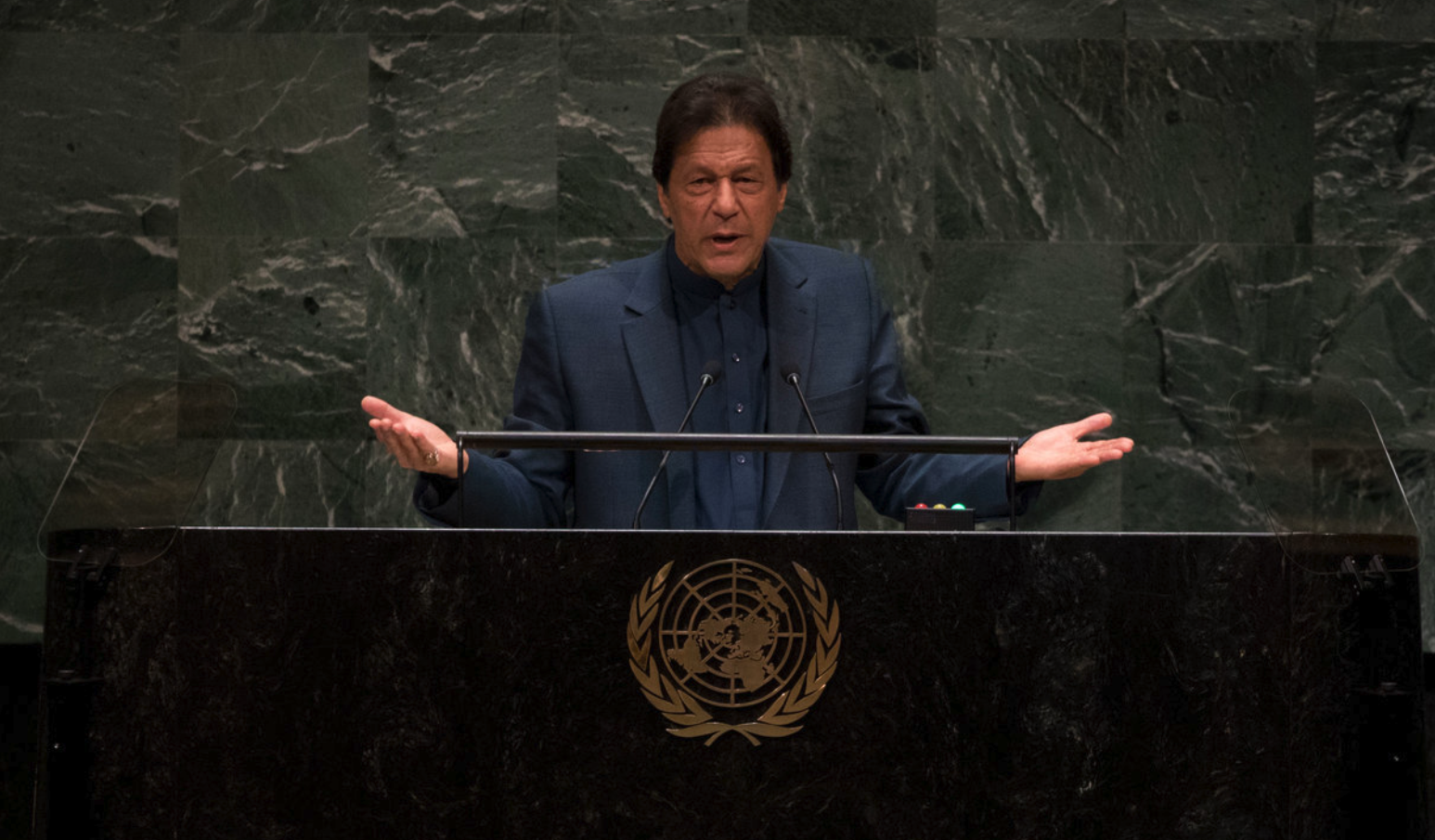
As Prime Minister, Imran delivered two widely circulated speeches at the UN General Assembly, in 2019 and 2020. The 2019 speech ran well beyond its allotted time and focused on Kashmir after the revocation of Article 370, and on Islamophobia in the West.

In bilateral diplomacy, he argued publicly against the war in Afghanistan, for direct talks between Riyadh and Tehran, for debt relief for developing countries during the pandemic, and for a Pakistan that chose partners on its own terms. He often gave long interviews and set-piece speeches in English to international audiences.

Imran Khan addresses the UN General Assembly

At the podium of the UN General Assembly, 2019 (Kashmir and Islamophobia).

The Vision

Riyasat-e-Madina

From his first day in office, Imran spoke of a single founding ideal: a state modelled on the principles of Medina, not theocratic or sectarian in the narrow sense, but fundamentally just. In his framing, that meant institutions that took responsibility for ordinary citizens.

  • The rule of law. Accountability that applied equally to the powerful and the poor: the principle he had campaigned on for twenty-two years, and the one on which everything else rested.
  • Universal welfare. Pakistan's first broad social safety net, including Ehsaas cash transfers, Sehat cards for health, Kamyab Jawan loans for young entrepreneurs, and Naya Pakistan housing for the first-time buyer.
  • Fiscal sovereignty. A country that raised its own revenue and made its own choices through tax reform, an end to the culture of write-offs for the connected, and a refusal to be anyone's client state.
  • A green country. The Ten Billion Tree Tsunami, the protected areas expansion, and the shift of electricity generation toward cleaner sources, linked in his speeches to how Pakistan presented itself abroad.
  • An independent foreign policy. Friends for Pakistan, not sides for Pakistan. No troops deployed in another country's war. Direct, public, often uncomfortable diplomacy.
The Price of Politics

Two moments, eight years apart

In September 2014, campaigning from atop a container at the Azadi March in Islamabad, he slipped and fell fifteen feet, landing on the road below. In November 2022, at a rally in Wazirabad, he was shot in the leg in an assassination attempt that killed a bystander and wounded several others. In both cases he returned to public life and to campaigning. The second attempt came three weeks after the first bullet.

2014 · Islamabad container fall during the Azadi March · 2022 · gunshot wound at the Wazirabad rally. He returned to public life from both.

On the Record

The work, in one frame

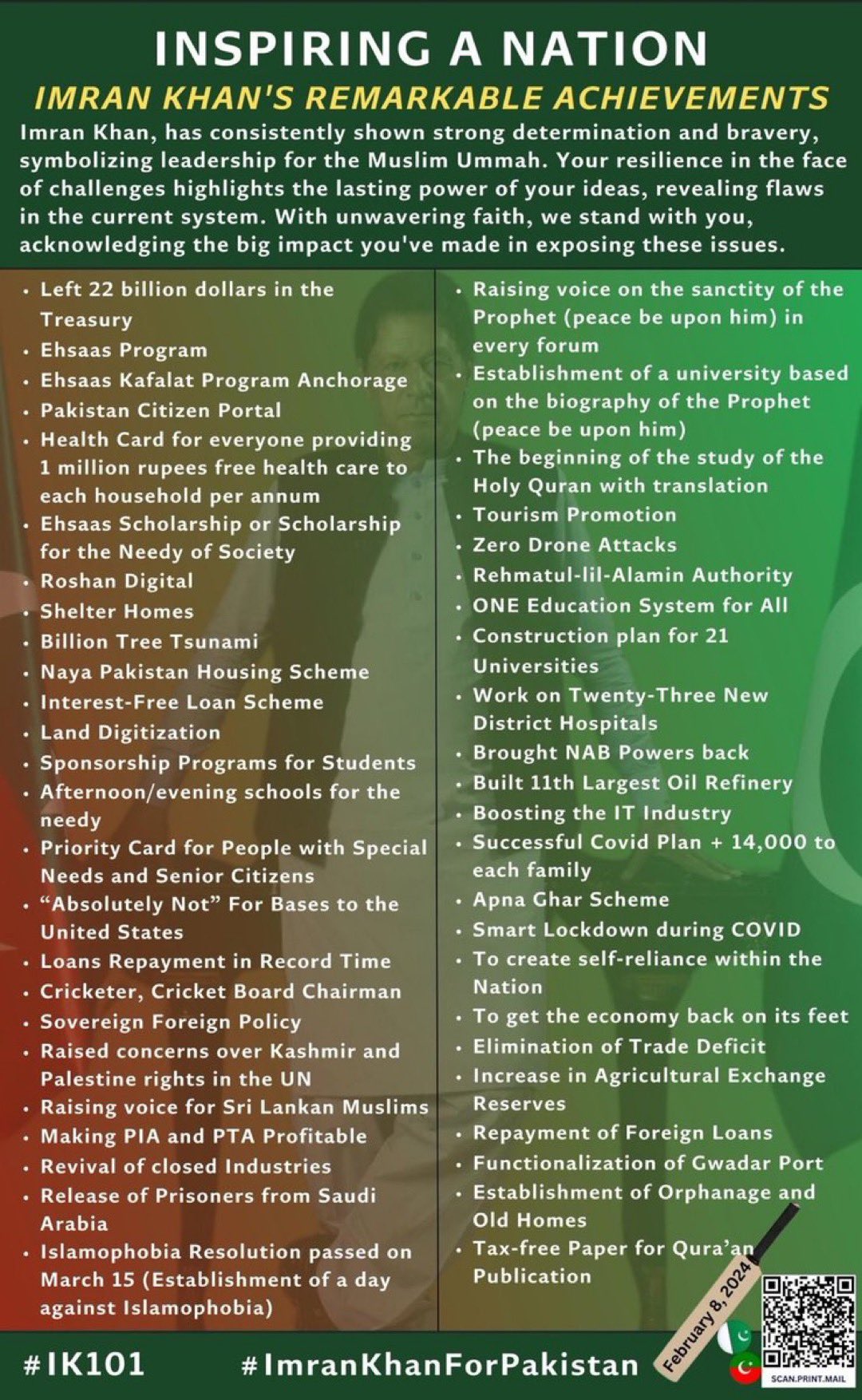
Decades of public life (cricket, philanthropy, governance, and advocacy) summarized by supporters in a single infographic below. It is not an official document, but it lists programs and themes his supporters highlight.

Inspiring a Nation, Imran Khan's remarkable achievements: a supporter-made infographic listing PTI government initiatives, foreign policy stances, and lifetime contributions
A supporter-made infographic · February 2024

The Chapter Still Being Written

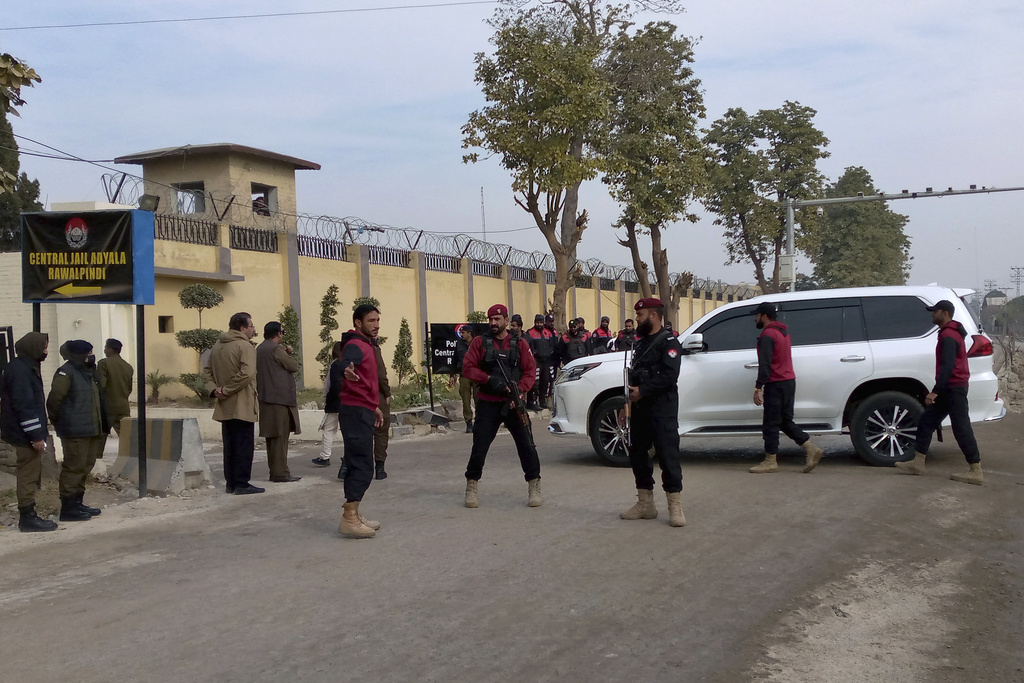
Central Jail Adiala, Rawalpindi

Central Jail Adiala · Rawalpindi

On 10 April 2022, a no-confidence vote in the National Assembly ended the PTI government. The years since have been the most turbulent of his public life. At the time of writing, he is being held at Central Jail Adiala, Rawalpindi.

This site focuses on his long public journey: cricket, philanthropy, and politics. Current legal and political developments keep changing, but his larger public story remains the focus here.

The next chapter is being written now. Not here.

Keep Reading

The full story, beginning to end

Return to the other chapters of a remarkable life.