A Lahori Childhood
Imran Ahmed Khan Niazi was born on 5 October 1952, in Lahore, then the cultural capital of newly independent Pakistan. His father, Ikramullah Khan Niazi, was a civil engineer of the Niazi Pashtun tribe, and his mother, Shaukat Khanum, belonged to the Burki tribe, a family that would later give Pakistan cricket several of its greats, including Imran's cousins Javed Burki and Majid Khan.
He grew up the only son in a household of five: four sisters and a mother whose steady warmth would become, decades later, the animating force behind his most enduring work. The family lived in Zaman Park, Lahore, a quiet enclave of colonial-era bungalows a stone's throw from the old city. It was in its gardens and back alleys, in games played between cousins, that the young Imran first picked up a cricket ball.
Those early years were comfortable but not opulent. His father valued discipline over display; his mother, education over ease. "He was shy," his sisters would remember. "But when he wanted something (a wicket, a century, an answer), he was quiet about it in a way that made everyone else notice."
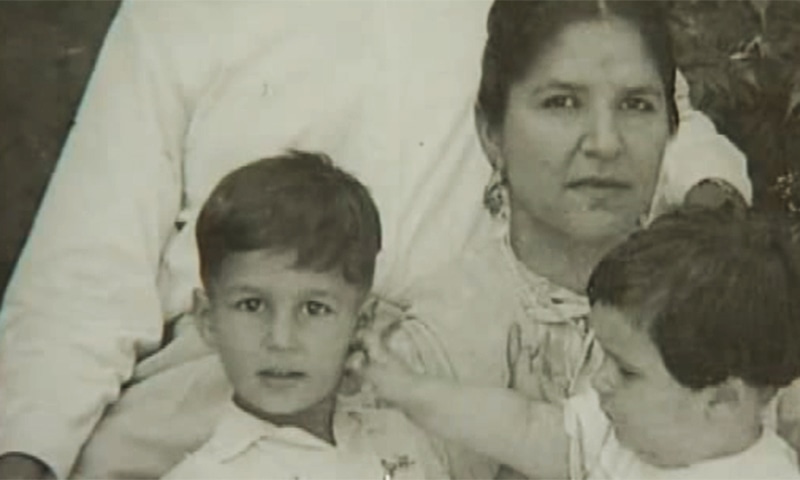
Young Imran with his mother, Shaukat Khanum, Lahore, early 1960s.
Aitchison & The Mall
At the age of seven, Imran entered Aitchison College, one of the most storied schools in the subcontinent, founded in 1886 on land granted by the British Raj and modelled, in some respects, on Eton. Its pink-sandstone main building, domed and arched in the Mughal-revival style, still dominates the skyline off The Mall in Lahore.
Aitchison was where Imran was exposed to a particular idea of the Pakistani elite: English as the medium of instruction, cricket taken seriously, and character assumed to matter. He took to the first two naturally. The third, he would spend a lifetime both embodying and arguing with.
By his mid-teens he was tall, lean, and quietly unplayable with a new ball. He captained the school's cricket teams, and at sixteen was already being spoken of in Pakistani cricketing circles as a talent worth watching. He later went on to Cathedral School in Lahore, continuing his secondary studies while his game matured.
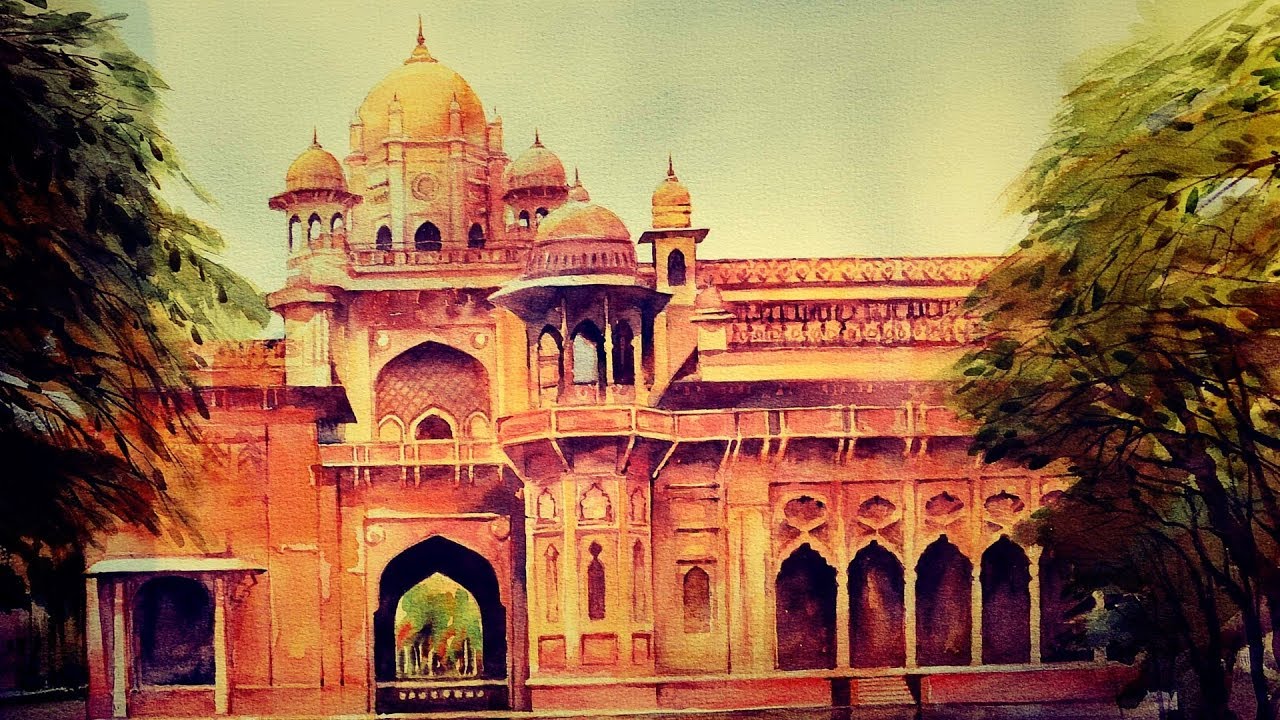
Aitchison College, Lahore, where Imran Khan spent his formative school years.
Worcester & Oxford
In 1971, not long after his Test debut for Pakistan at just eighteen, Imran moved to England for the final leg of his education. He completed his A-Levels at the Royal Grammar School in Worcester, a thousand-year-old institution in the West Midlands, where he played county-level cricket for Worcestershire in his summers.
From Worcester he went up to Keble College, Oxford, to read Philosophy, Politics and Economics (PPE), the degree, famously, of prime ministers. He graduated in 1975. In parallel he represented Oxford University at cricket, captaining the Blues in 1974 and scoring a century against Cambridge in the Varsity match. It is the Oxford years, perhaps more than any others, that explain the Imran Khan who would later stand on political stages: a man equally at home in the Pashtun patrimony of Mianwali and the panelled rooms of an Oxbridge college.
Three decades later, in 2005, he was appointed Chancellor of the University of Bradford, a role he held for nearly a decade, until 2014. He resigned, characteristically, over a matter of conscience.
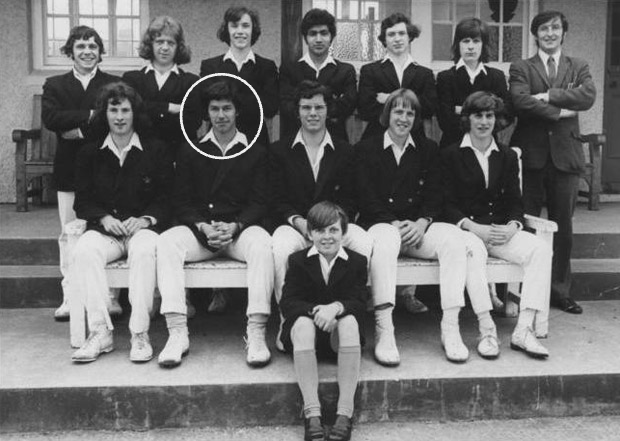
Oxford University cricket team, early 1970s; the young Imran circled.
The Crease, The Country
The cricket story is told in full on its own page. It is the story of a teenager who became the captain who taught Pakistan to win; of a fast bowler who learned reverse swing from Sarfraz Nawaz and passed it on to Wasim Akram and Waqar Younis, a lineage that reshaped fast bowling; of a man named Wisden Cricketer of the Year in 1983 and inducted into the ICC Cricket Hall of Fame in 2009.
Above all, it is the story of a rallying cry, "fight like cornered tigers," that led an under-prepared Pakistan team, written off in the group stages, all the way to the MCG on 25 March 1992, where they beat England in the final and Imran lifted the country's first and only Cricket World Cup.
He retired that same year. He was thirty-nine. The country was intoxicated. And he, quietly, was already thinking about something else.
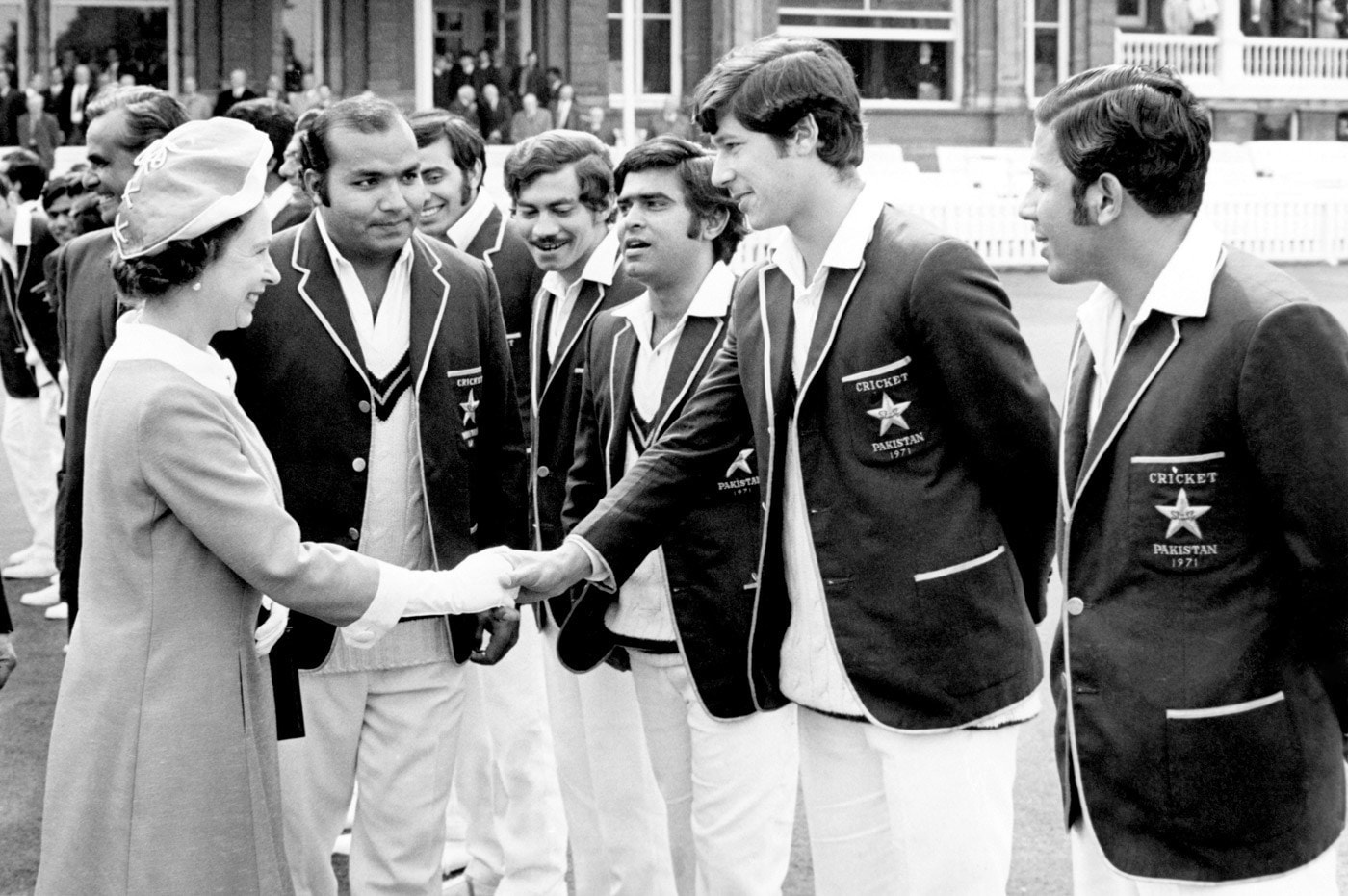
The 1971 Pakistan tour of England: the team presented to Queen Elizabeth II at Lord's.
Family & The Private Man
Imran Khan has been married three times. In 1995 he married Jemima Goldsmith, the British socialite and campaigner, with whom he had two sons: Sulaiman Isa, born 1996, and Kasim, born 1999. They divorced in 2004. A brief marriage to journalist Reham Khan in 2015 ended the same year. In 2018, he married Bushra Bibi, a long-time spiritual adviser; they have remained married since.
He has, over the years, kept homes in two places. Bani Gala, on the hills above Islamabad, became his political base, a retreat with views of the Margalla range where political meetings stretched into the evening. Zaman Park in Lahore, the neighbourhood of his childhood, remained the family home. Both, at different moments, have drawn crowds of supporters and columns of police vans.
Friends describe a man of unshowy routines: early rising, long walks, a cup of green tea, and a surprisingly disciplined reading life. Sufism (the Islamic mystical tradition) has been a consistent private interest, one he has spoken about with candour in public.
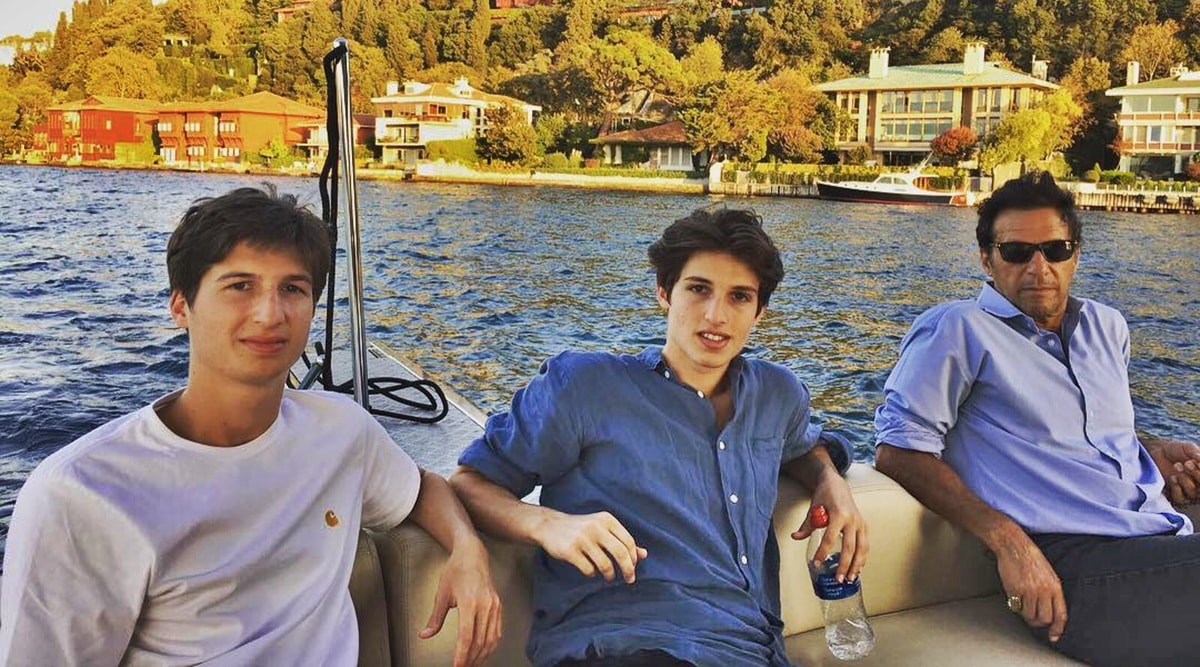
With his sons Sulaiman Isa and Kasim, on the Bosphorus.
The Turning Point
In 1985, at the height of his cricketing powers, his mother was diagnosed with cancer. Pakistan, at the time, had no dedicated cancer hospital. Families travelled abroad for treatment if they could afford it; most could not. Shaukat Khanum died within the year.
That grief did not leave him. It took a shape. In 1994, nine years after her death and two years after his World Cup, the Shaukat Khanum Memorial Cancer Hospital & Research Centre opened its doors in Lahore. More than three-quarters of its patients have been treated free of charge, every year since. Branches in Peshawar and Karachi followed. Namal University in Mianwali followed. He had set out to give ordinary families access to cancer care that had been out of reach when his mother was ill.
Two years after the hospital opened (in April 1996), he founded Pakistan Tehreek-e-Insaf. Twenty-two years later, on 18 August 2018, he took the oath of office as the 22nd Prime Minister of Pakistan. The boy from Zaman Park had arrived at Aiwan-e-Sadr.
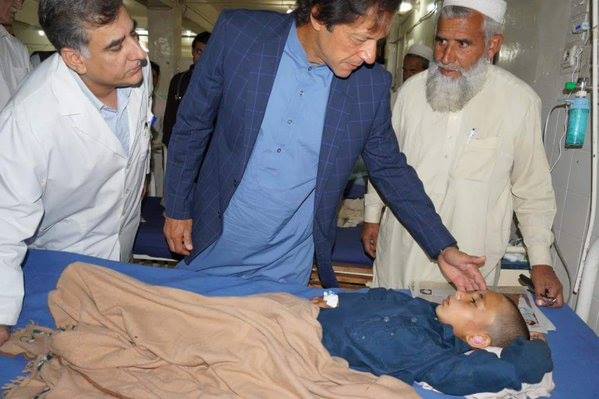
With a young patient at Shaukat Khanum Memorial Cancer Hospital.