An 18-Year-Old at Edgbaston
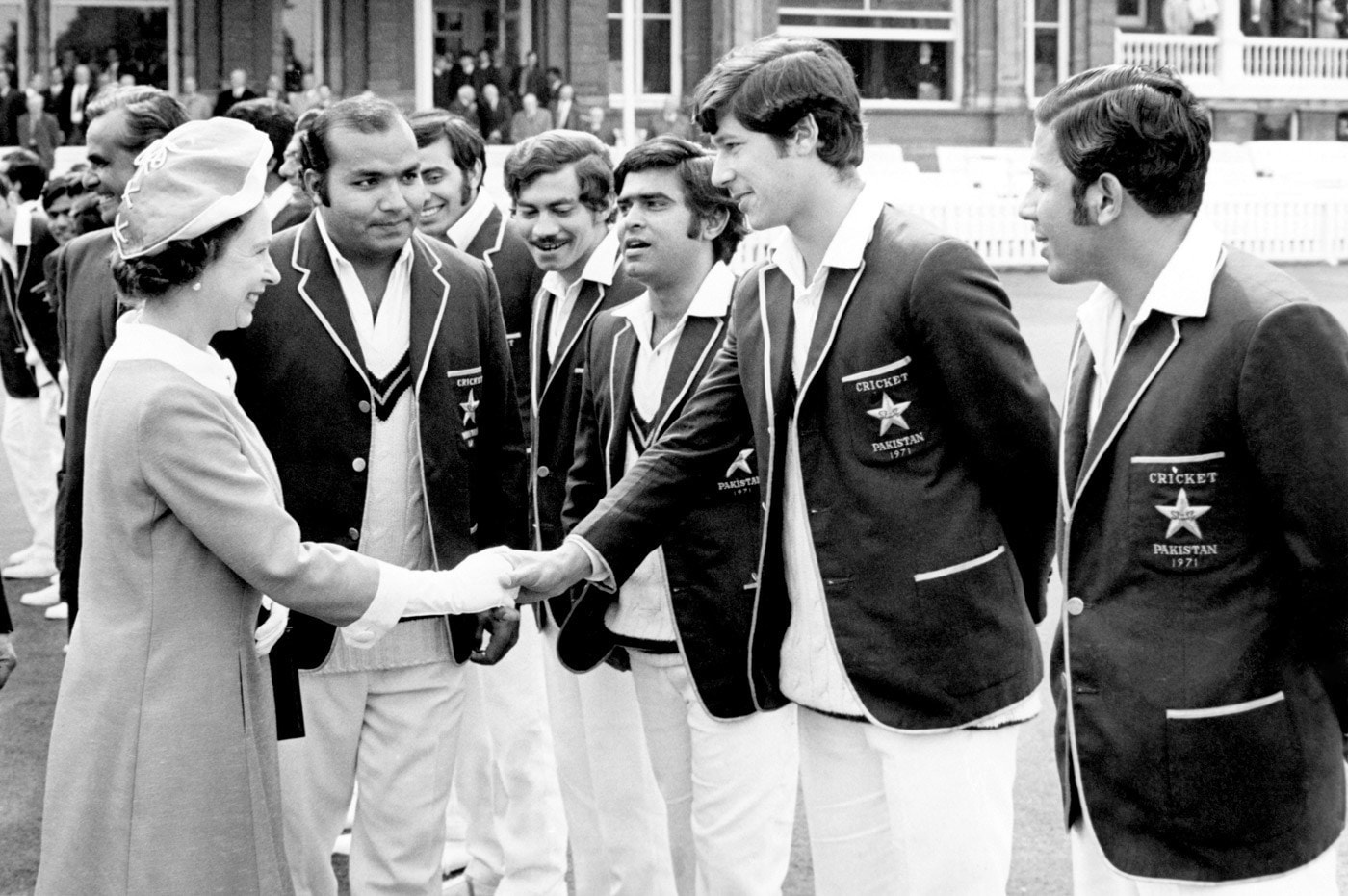
On 3 June 1971 in Birmingham, a tall eighteen-year-old with a long, loping run-up took the field for Pakistan against England. He was Cap No. 88, an unknown, thrown in for a single Test. He bowled 23 overs of honest medium-pace, took no wickets, and was dropped.
It would be three years before Imran Khan played another Test. But in those three years he transformed himself. At Oxford he studied the angle of delivery; in the nets he added raw, hostile pace to a bowling arm already capable of prodigious swing. By 1976 he was the fastest bowler in the Pakistan side. By 1980, one of the fastest in the world.
The eighteen-year-old never came back. The man who did was someone else entirely.
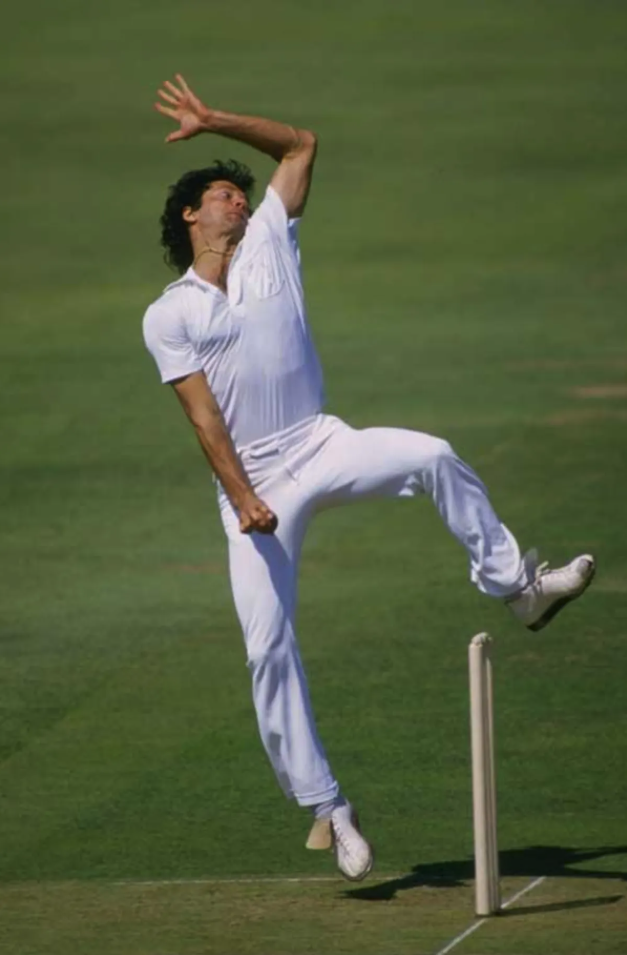
The delivery stride: lean, side-on, and quick.
A Lineage Called Reverse Swing
In the late 1970s, Imran began experimenting with something most bowlers considered impossible: making an old ball swing towards the shiny side, not away from it. The technique, later called "reverse swing," had been discovered by the great Pakistani fast bowler Sarfraz Nawaz, who taught it to Imran during their long partnership.
Imran, in turn, passed it on. First to his young protégé Wasim Akram. Then, through Wasim, to Waqar Younis. Imran, Wasim, and Waqar would go on to reshape fast bowling worldwide, and their names, spoken together, remain shorthand for one of the strongest attacks in the history of the game.
It is one of the quiet truths about him: more than the runs and the wickets, Imran Khan changed how fast bowling was taught and used.
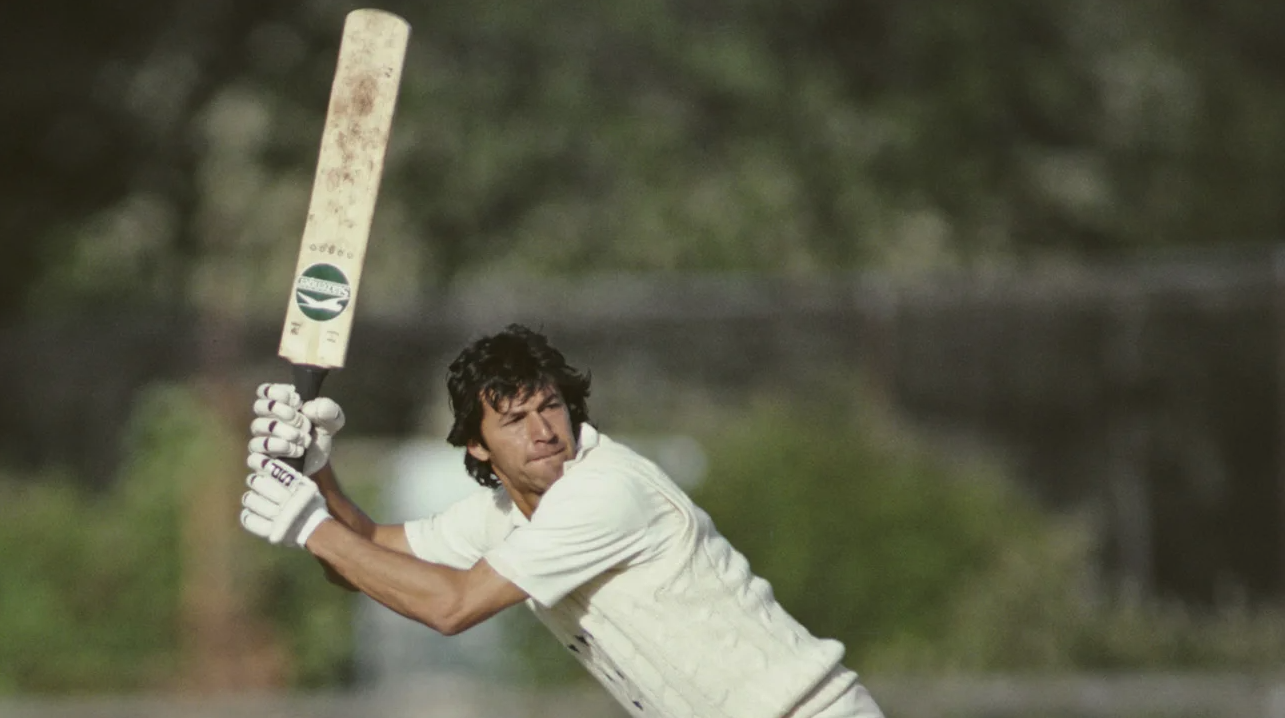
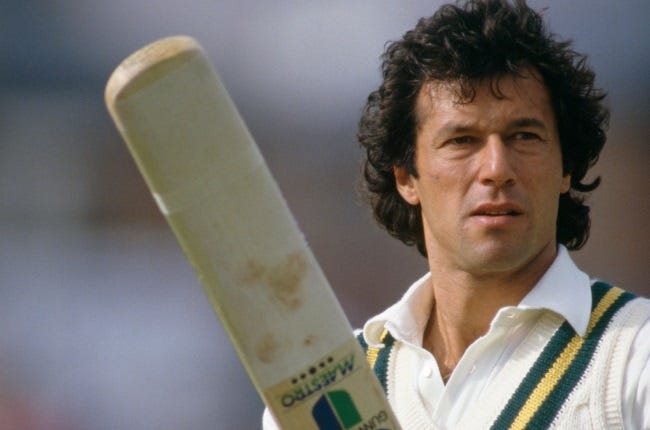
A complete all-rounder: Test batting average 37.69, with six centuries.
Three generations, one art
How reverse swing travelled from its inventor, through Imran, to the two bowlers who would take it around the world.
The Art of Leading
Imran was given the Pakistan captaincy in 1982. The side he inherited was talented but undisciplined, a team that had never beaten England in England and had never beaten India in India. Under his leadership, in the same calendar year of 1987, they did both.
He was a captain in the old style: instinctive, uncompromising, prepared to drop star players who did not train properly, prepared to argue with the board for the bowlers he wanted. He advocated for neutral umpires in Test cricket long before the ICC adopted it, a reform he championed precisely because it would take a Pakistani home advantage away. He cared about the game more than the result.
In 1989, he was named International Cricketer of the Year. In 1992, he was thirty-nine, and about to do the thing he would be remembered for above all others.
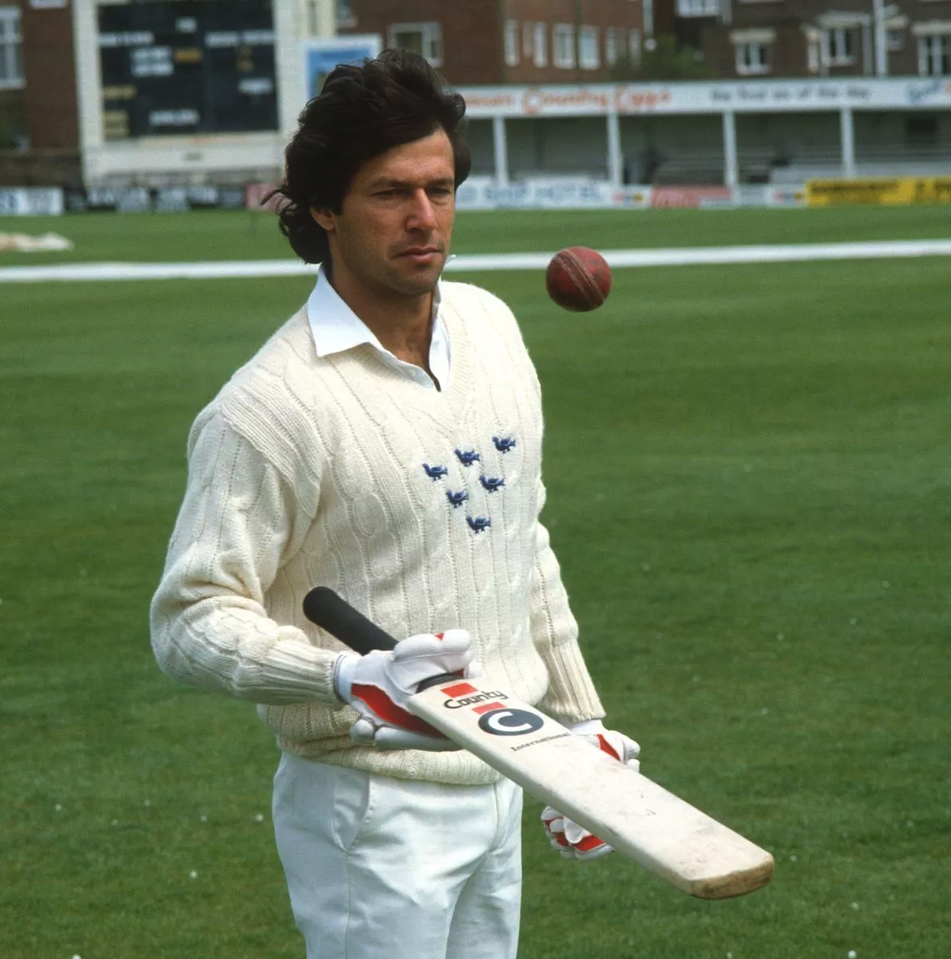
The captain: 87 Tests as skipper, across a decade of command.
The Night at the MCG
Pakistan entered the 1992 World Cup as underdogs and, for most of the tournament, played like one. By the group stage they had a single win and four losses. They were, by general consensus, out. On television, an exasperated commentator called them "a team of no-hopers." That phrase found its way into the Pakistani dressing room.
What Imran said to his players in those weeks has since been reduced to four words, fight like cornered tigers, but the force behind them was not rhetorical. It was a refusal to accept the narrative that had already been written. Pakistan won against New Zealand. They won against Australia. They won the semi-final. And on the night of 25 March 1992, at the Melbourne Cricket Ground, in front of 87,000 people and watched on television across the country, they beat England in the final to lift the World Cup.
Wasim Akram took two wickets in two balls in the middle overs. Imran, promoting himself up the order, scored 72. At the presentation, he thanked early in his remarks the hospital his mother's name would one day live on in.
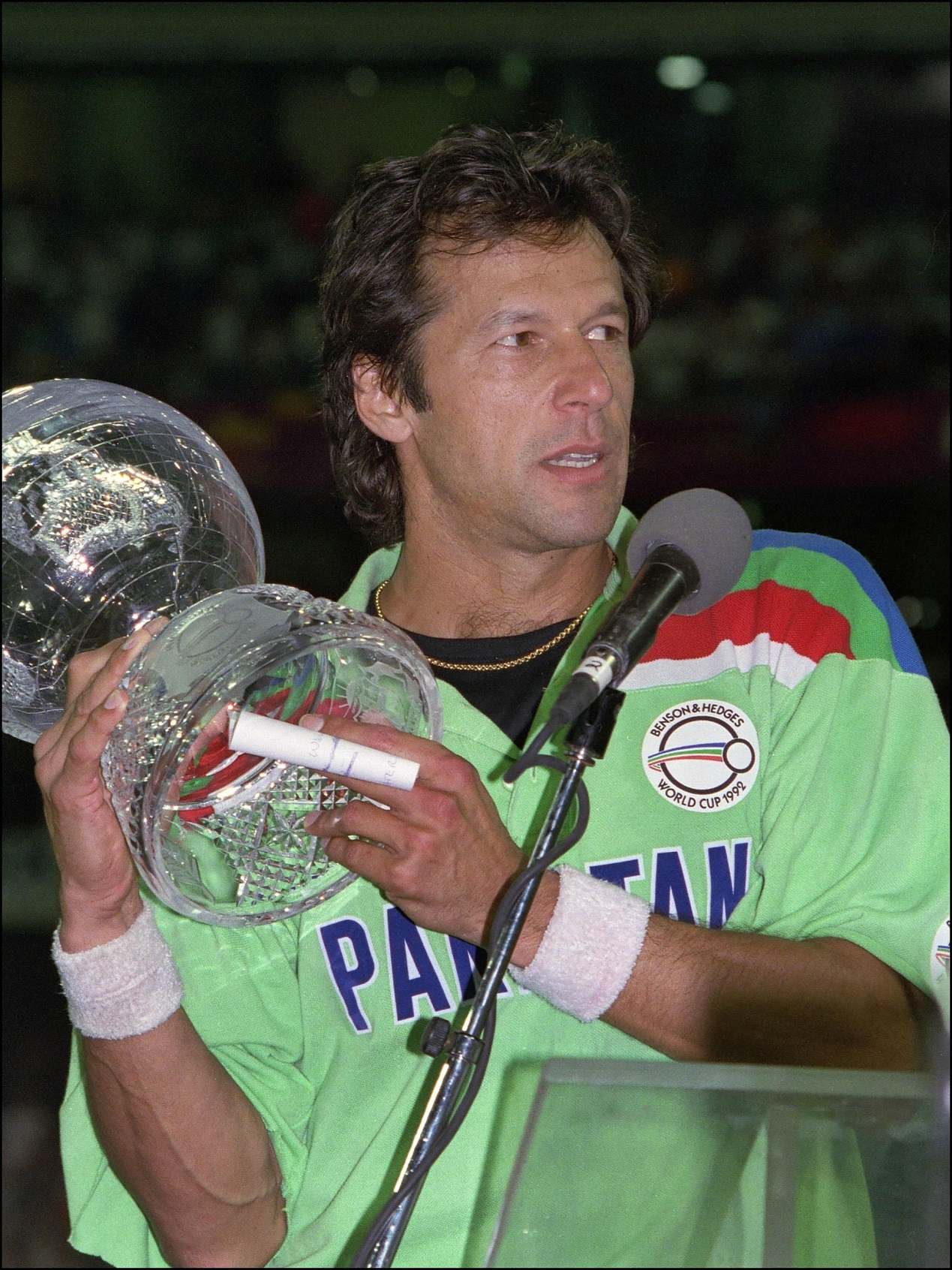
The trophy. Pakistan's first and, to date, only World Cup.
Wisden, the Hall of Fame & Beyond
In 1983, at thirty-one, he was named one of the five Wisden Cricketers of the Year, the closest thing cricket has to a canonical annual honour. In 1989, the International Cricketer of the Year. In 2009, he was inducted into the ICC Cricket Hall of Fame, joining an international roll of the game's greatest names.
He holds, among other records, the highest ever Test all-rounder's rating; the second-best bowling figures by a captain in an innings of Test cricket (8/58 against Sri Lanka at Lahore, 1982); and, to this day, the most Player-of-the-Series awards in Test cricket for Pakistan. But statistics were never the point. "I don't play this game for records," he once said. "I play it to win, and to do it well."
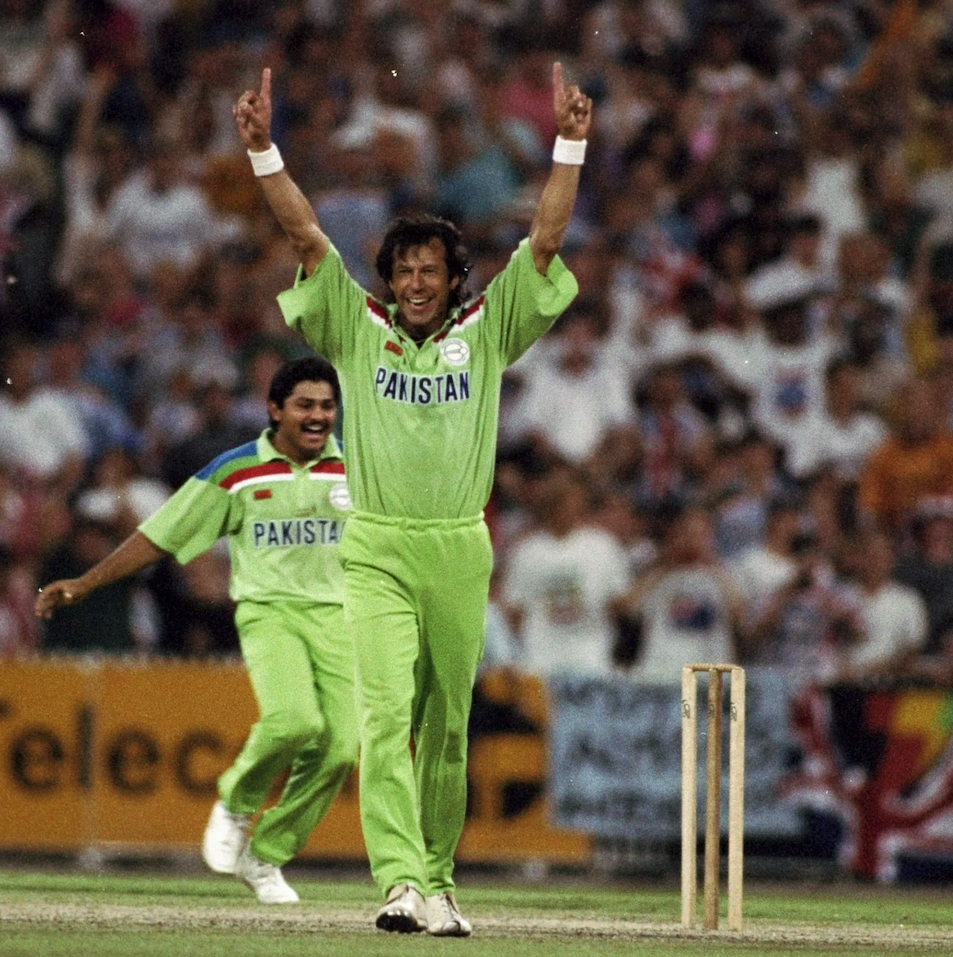
Pakistan Win the 1992 World Cup
The winning moments at the MCG, Melbourne, 25 March 1992.